

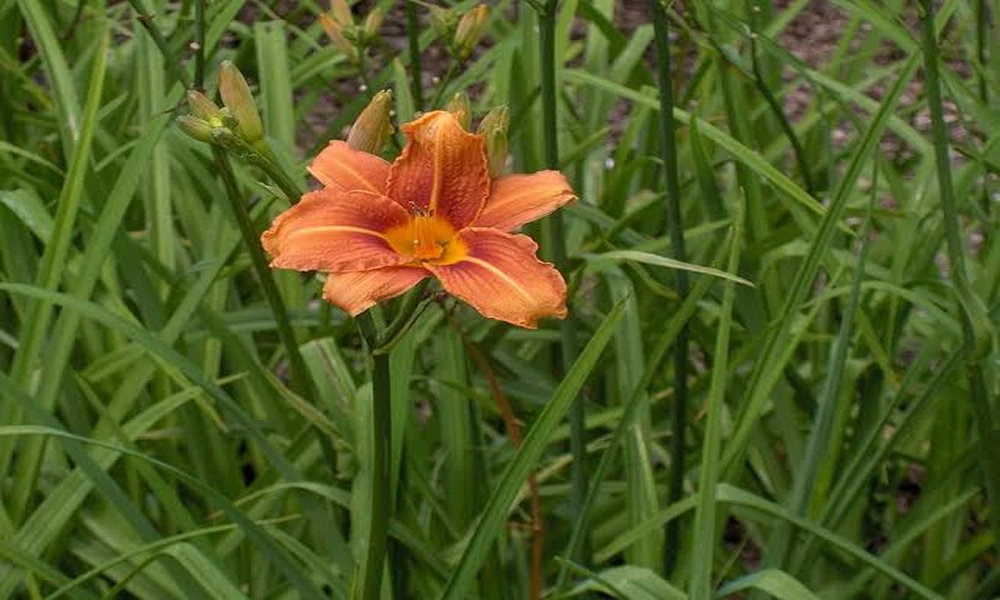
A garden seen through glass is a composition before it is a collection of plants. The window crops the scene, fixes the viewing height, exaggerates gaps, and reduces fine detail. Daylilies contribute seven useful qualities to that framed view: a recognizable foliage silhouette, seasonal color at a readable height, repetition across distance, a middle layer between lawn and shrubs, movement without visual confusion, continuity after bloom, and a stable reference against changing light. Those contributions become clear only when the gardener designs from the room as deliberately as from the path.
Start with the Frame, Not the Flower
Stand where the view is actually used: beside the kitchen counter, at a desk, or in a chair rather than directly against the glass. The window edge removes part of the garden and emphasizes whatever remains. Note which bed corners disappear, whether the lower foreground is hidden, and where the horizon line falls. A plant placed for a path-level view may sit too low or too far outward to matter from the room.
A premier grower of daylily plants notes that the indoor view exposes weak spacing sooner than a close garden walk. SwallowtailDaylilies advises beginning with the window used most often rather than the flower expected to look most impressive. The grower recommends placing empty nursery pots at proposed clump locations, returning indoors, and checking whether the shapes form a calm sequence across the pane. Reflections, screens, curtains, and the height of furniture all alter that sequence, so the professional assessment uses the real room under ordinary conditions. The advice also gives foliage equal status with bloom: a clump earns its position when the leaf fan holds the middle distance, separates overlapping shrubs and perennials, and keeps the scene legible after the strongest color has finished. This method turns a familiar window into a precise design tool instead of treating the interior view as a pleasant accident.
Treat mullions and separate panes as visual dividers. A strong clump cut exactly in half by a vertical frame loses clarity, while a repeated pair on either side can create balance. Move proposed positions a small distance and watch how the composition changes. Inches in the bed sometimes translate into a much cleaner silhouette from indoors, particularly when the window is narrow or the viewing angle is oblique.
The frame also reveals empty zones that do not feel empty outdoors. A gap may be useful breathing room from the path yet appear as an accidental hole behind glass. Before filling it, determine whether nearby foliage will expand into the space later in the season. The goal is not uninterrupted planting. It is a deliberate pattern of mass and pause that remains understandable from a fixed viewpoint.
Photograph the window in early spring, midsummer, and autumn from the same spot. The images show which outlines persist and which depend entirely on temporary flowers. Daylilies belong where their foliage strengthens more than one of those frames. A position that only repairs a single photograph often creates congestion when shrubs leaf out or surrounding perennials reach their full height.
Clean the glass before drawing conclusions about weak color or contrast. Dust, screens, and seasonal condensation mute the scene unevenly and can make a well-placed clump appear less distinct. The exercise sounds mundane, yet it keeps the design response proportional. Change the garden only after the actual view, rather than the condition of the window, has been evaluated.
Build a Foliage Silhouette That Reads Through Glass
Fine leaves and small flowers lose definition across a room, especially through screens or reflections. The broad, arching fan of a daylily reads as a single middle-scale shape, giving the eye something to recognize between low groundcovers and larger woody forms. Place that silhouette against a contrasting background. Dark shrubs, open mulch, or upright stems define the leaf fan more clearly than a tangle of foliage with the same width and value.
Avoid arranging every clump as a separate specimen. From indoors, several isolated fans create a dotted pattern that competes with the rest of the border. Grouping two related positions into a loose visual phrase often feels calmer. The clumps need not touch or match; they simply need enough similarity in size and surrounding space to register as one intentional layer.
Consider the direction of the leaves. Mature fans arch outward, so a clump near an open foreground appears broader than one pressed between taller neighbors. Reserve a clean lower edge and prevent low companions from burying the base. This visible footing makes the foliage look settled in the bed and helps the shape survive the flattening effect of glass.
After flowering, remove spent scapes and look again from the room before making other changes. The remaining leaf mass should still connect nearby plants or support the bed’s contour. If the scene suddenly loses structure, the placement relied too heavily on bloom. Strengthen the background, adjust a companion, or revise the interval rather than immediately adding more daylilies.
Silhouette also depends on what happens inside the room. A dark interior makes the outdoor scene look brighter, while a sunlit room reduces contrast through reflection. Review the foliage with curtains and blinds in their normal positions. A composition designed under staging conditions may not perform during breakfast, work, or evening use when the room’s surfaces influence perception.
Place Color for Distance and Changing Light
Color viewed from indoors is influenced by distance, window tint, interior brightness, and outdoor glare. Pale flowers may look clear in evening light but wash into paving at noon; deep colors may hold against a bright lawn yet disappear in shadow. Observe the bed at the times the room is occupied most. A color decision made only outside at midday ignores the conditions under which the composition is usually enjoyed.
Use a daylily color to reinforce an existing note rather than invent a new palette in the middle of the view. Warm brick, painted furniture, foliage undertones, or a repeated perennial can supply the connection. The echo need not be exact. A shared warmth or depth is enough to make the bloom feel embedded in the scene instead of pasted over it.
Separate strong colors with foliage when the window compresses depth. Two saturated patches that sit several feet apart outdoors may appear adjacent through the pane. A calm green interval restores the distance between them and allows each to keep its own role. Daylily foliage helps with that separation, but only if the leaf fans remain visible rather than hidden inside a mass of competing flowers.
Evening reflection changes the balance again. Interior lamps can turn the glass into a mirror before the garden is fully dark. Pale or mid-value flowers near the main sightline often stay readable longer than subtle textures. Test the view with the room lit and choose the clump position for genuine use, not an idealized photograph taken with every reflection removed.
Color relationships across glass benefit from larger areas than close garden combinations. A tiny companion echo may disappear completely, leaving the daylily hue unsupported. Repeat the related tone in a broader foliage mass, container, or distant flower group. The connection should be subtle outdoors yet substantial enough to survive distance and the optical flattening of the pane.
Use Repetition to Connect Rooms and Separate Panes
A garden may be visible from several rooms, each with a different crop of the same bed. Repeating a foliage shape or related flower tone helps those fragments feel like parts of one place. Walk indoors from window to window and identify the overlap. A clump visible in two views often serves as a hinge, while another farther along continues the rhythm without requiring identical spacing.
Repetition should respond to architecture. A long horizontal window supports a broad sequence across the border, whereas a narrow stair window needs one clear vertical or centered moment. Copying the same layout for both weakens each view. Use the dependable shape of daylilies, then vary the interval, companion texture, and prominence according to the frame.
When reviewing daylily plants for sale for a window-led design, judge the mature clump as a compositional unit rather than treating each flower photograph as the whole decision. The plant has to repeat at room scale, remain visible through surrounding growth, and fit the amount of garden captured by the pane. These requirements narrow the choices in a useful way and discourage impulsive color collecting.
When several rooms overlook the garden, decide whether they share one primary scene or deserve separate focal moments. A repeated daylily visible everywhere can unify the house, but too many cross-window accents create constant competition. Give one room the strongest bloom view and let other rooms receive foliage rhythm, side views, or a quieter continuation of the same palette.
Protect the View from Seasonal Gaps
The window is unforgiving when a border collapses after one bloom period. Daylily foliage supplies continuity, but its condition and neighbors still determine how long that support lasts. Pair the clump with plants that take over later without smothering it. Grasses, sturdy late perennials, or a compact shrub can provide the next layer while the daylily leaves remain a lower green base.
Spring deserves equal attention. Before the daylily reaches full size, bulbs and early perennials can occupy the visual gap, provided their fading foliage is not trapped in a dense knot. Leave enough room for the developing fan to become the dominant middle layer naturally. The handoff should look gradual from the room instead of switching from bare soil to sudden summer volume.
Winter structure belongs mainly to the surrounding design, not to dried daylily foliage. Once cleanup is appropriate for the local garden, the bed still needs a readable outline supplied by evergreen shapes, seed heads, stone, or the edge itself. Designing that framework prevents the indoor view from depending on a plant outside its strongest season.
Seasonal continuity includes the moment when surrounding plants are cut back. A companion that supported the daylily all summer may vanish abruptly during cleanup, exposing a new gap from the window. Stage maintenance when possible and retain enough permanent structure to avoid a stripped appearance. The design should anticipate ordinary garden work as well as natural plant cycles.
Keep the Foreground Quiet and Run the Seven-Part Test
The nearest strip of lawn, terrace, or low planting occupies more of the window than its actual garden depth suggests. If that foreground is busy, the middle-distance daylilies lose definition. Maintain a clean edge and limit small competing accents directly below the sightline. A quiet foreground acts like the lower margin of a picture, allowing the foliage and color beyond it to carry the composition.
Then test the seven contributions in ordinary language. The leaf fan should form a readable silhouette, the bloom should work at viewing distance, and repeated clumps should connect the frame without becoming dots. The plant should bridge scale, introduce controlled movement, remain useful after bloom, and relate to the actual light passing through the window. A weakness in one category often points to a placement or companion problem rather than a need for another plant.
Sit down for the final review instead of hovering near the glass. Look away and back again, noticing where the eye lands first and how it travels. A strong composition offers a clear entry, a middle pause, and enough quiet space to understand both. The daylily should support that route without demanding constant attention, proving its value during routine moments rather than only during a deliberate garden inspection.
Repeat the review after the border has matured for a full season. Growth may close a gap, shift the apparent center, or hide a leaf fan that once looked distinct. Edit the nearest competing plant before moving the structural clump. When the original purpose remains sound, small corrections preserve continuity and let the window view deepen instead of being redesigned from scratch each summer.
The seven-part review is especially useful before purchasing a second related clump. Confirm that the first placement genuinely improves silhouette, color, distance, repetition, middle-layer structure, movement, and post-bloom continuity. If one plant is solving only a temporary color gap, repeating it multiplies the weakness. Expand the idea only when the complete window composition benefits.