

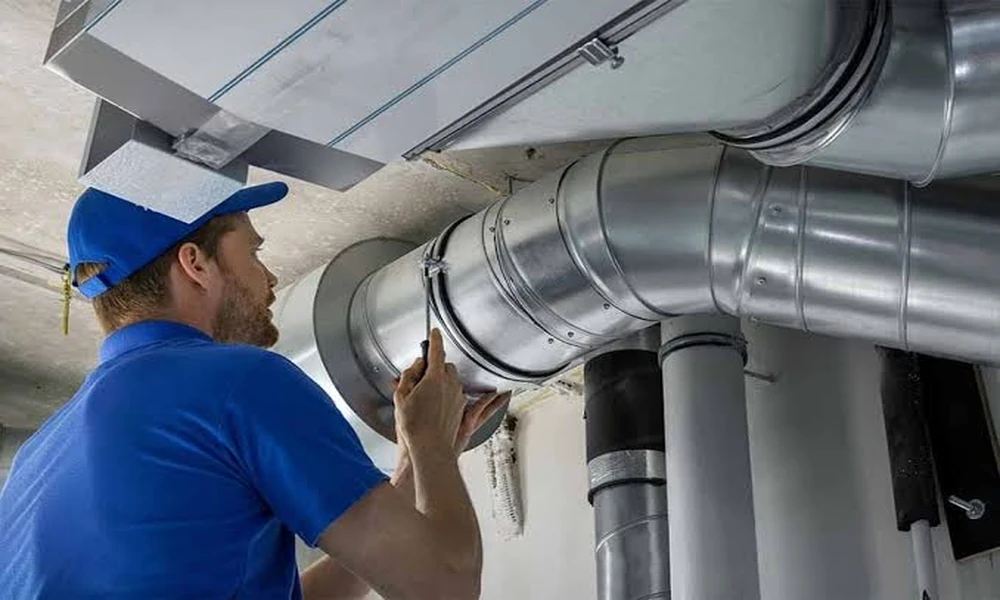
The average American household spends well over a thousand dollars a year heating and cooling a home, and somewhere between a quarter and a third of that air never reaches the rooms you actually sit in. That is the part nobody puts on a utility bill. It just leaks out through a joint in the attic while you are watching television downstairs, wondering why the bedroom never quite catches up to the thermostat.
Most homeowners direct all their attention at the furnace, the air conditioner, or the filter slot. The ductwork itself gets ignored because it lives behind drywall and above ceilings. That is a mistake, and it is usually an expensive one. If you have been putting off an inspection, the folks who handle air duct cleaning services by Daniels HVAC describe the same conversation happening over and over: the system is running fine, the equipment is newer than the house, and the airflow still feels off.
Here is what I want you to take away before we get into the details. A duct system is either tight and clean, or it is quietly working against you. There is no neutral middle ground, and the symptoms show up long before anything actually breaks.
Three symptoms that mean your ducts need attention
You do not need thermal imaging or a diagnostic van to spot trouble. The signs are pretty ordinary once you know what you are looking for.
- Uneven rooms. If the room above the garage is always five degrees hotter than the hallway, or the guest bedroom never warms up no matter what you set the thermostat to, that is a distribution problem. Leaky or disconnected duct runs bleed conditioned air into unconditioned space, so the far end of the house gets the leftovers.
- Dust that returns within days. Every house collects dust. A house with compromised ducts collects it faster, and it settles right around the supply registers. Run a finger across a vent a week after you clean it. If you leave a visible streak, the supply side is likely pushing debris instead of just air.
- A bill that stops making sense. Your usage habits have not changed, the weather is comparable to last year, and the number at the bottom of the statement keeps climbing. Restricted airflow forces the equipment to run longer to hit the same set point, and that extra runtime lands squarely on your bill.
Cleaning, sealing, or replacing: how to decide
This is where people waste money. They book a cleaning because it is the service they have heard of, then wonder why the airflow problem is still there. Cleaning and repair solve two different problems, and you usually need a clear diagnosis first.
| What you are seeing | What it usually means | The fix |
|---|---|---|
| Dusty registers, musty smell, recent remodeling | Debris sitting inside the duct runs | Cleaning plus new filtration |
| One room never heats or cools | A disconnected, crushed, or leaking run | Repair and reseal |
| Visible gaps at joints and plenum connections | Loose seams bleeding conditioned air | Mastic and foil tape sealing |
| Flex duct pinched flat or crushed behind a joist | Airflow choked at the source | Replacement of that run |
| Ductwork older than the house’s last remodel | Failing insulation and degraded lining | Partial or full replacement |
My own rule of thumb: if the ducts are dirty but tight, clean them. If they are tight and clean but one room still struggles, seal and rebalance. If you can see daylight through a seam, stop cleaning and start repairing. Cleaning a leaking system just sends the same dust back out through the gap.
One thing worth knowing before you hire anyone. The Environmental Protection Agency points out that indoor air can carry pollutant levels higher than outdoor air, which is the entire reason duct hygiene gets attention in the first place. It does not make a cleaning mandatory every year, and anybody who tells you it does is selling you something.
How often should ductwork actually be cleaned?
Less often than most companies advertise. For a typical home with no pets, no recent construction, and a clean filter habit, every three to five years is reasonable. Move that up if you have shedding animals, if you just finished a renovation, if someone in the house has respiratory sensitivities, or if you have never had it done and the house is more than a decade old.
Filter changes matter more than most people admit. A one inch filter is cheap and it is also limited. If you are replacing a flimsy filter every three months on a system that runs all summer, that filter is doing real work. Let it go six months and the blower starts pulling dust past it and into the duct interior, which is exactly the mess you were trying to avoid.
I would spend money on a decent filter and a sealing appointment before I spent it on a cleaning. Tight ductwork keeps whatever is inside it from traveling.
What a real inspection looks like
You should be suspicious of any technician who quotes a price before seeing your system. A legitimate inspection involves opening the plenum, checking accessible runs, looking at the blower compartment, and testing static pressure. It takes a while.
- They should show you before-and-after photos of the interior of the duct, not just the register.
- They should tell you the source of the debris, not just that there is debris.
- They should recommend sealing or repair when the problem is leakage, even though cleaning is the easier sale.
- They should not promise health outcomes, because no honest contractor can.
According to ASHRAE, the professional society that writes the standards engineers and contractors work from, duct leakage in typical residential systems is a well-documented and widely studied performance problem. That is worth remembering when someone tells you a cleaning alone will fix uneven cooling. It usually will not.
The order of operations matters, and getting it backwards wastes money. Diagnose first. Repair and seal second. Clean third, or not at all if the system is already tight and reasonably clean. And revisit the filter on a schedule you will actually keep.
If you want the compression version: dirty ducts cost you air quality, leaky ducts cost you money, and crushed ducts cost you comfort. Figure out which one you have before you book anything, and scrutinize the estimate like you would any other home repair.
Which room in your house never gets comfortable? That is your starting point, and it is a better diagnostic clue than anything a sales call will tell you.
Homeowners in the Albuquerque area dealing with high desert dust and seasonal temperature swings have a specific case worth addressing through the Department of Energy guidance on home energy efficiency before trouble sets in for good.