


You look in the mirror, notice the natural teeth have picked up stains over time, and then remember the crowns, fillings, bonding, or veneers already in your smile. That is where the stress starts, especially if you are searching for a dentist in Saint Thomas, VI. You want whiter teeth, but you do not want a patchy result where some teeth brighten and the restorations stay the same color. If that sounds familiar, you are not overthinking it. Whitening a smile with dental work takes planning because natural enamel and restorative materials do not respond the same way.
The good news is that you usually do have options. The right plan often means checking the health of your teeth first, whitening natural enamel before replacing visible restorations if needed, and choosing a method that fits your budget and timeline. A smile whitening plan with crowns or fillings works best when it is coordinated, not rushed.
Existing dental restorations change how tooth whitening works
Natural teeth can lighten with peroxide based whitening treatments. Restorations do not. That includes many fillings, crowns, veneers, and bonded areas. The result is simple but frustrating. Your untreated enamel may become several shades lighter, while the restoration keeps its original color. The more visible the restoration is, the more obvious the mismatch can look.
This matters most for front teeth. A small filling near the edge of a front tooth can suddenly stand out after whitening. A crown placed years ago may have matched beautifully at the time, then look darker once nearby teeth are whitened. If you already paid for cosmetic work, the idea of replacing it just to match a new shade can feel expensive and unfair. Still, planning ahead usually costs less than whitening first and trying to fix the color mismatch later.
A health check comes before shade changes. If you have decay, leaking fillings, gum irritation, or tooth sensitivity, those issues need attention first. Tooth sensitivity can worsen during whitening, especially if enamel is worn or roots are exposed. If you have older restorations, your dentist may also want to confirm they are still sealed well before using any whitening gel.
Whitening natural teeth before replacing visible restorations creates a better match
One of the most useful strategies is sequencing. If your restorations are healthy but visible, many dentists recommend whitening the natural teeth first, waiting for the final shade to settle, and then replacing the restorations that show when you smile. That approach gives the dentist a stable color target instead of guessing where your teeth will land after bleaching.
This is where people often get tripped up. They whiten with over the counter strips, love the brighter shade, then realize the crown on one front tooth now looks yellow by comparison. At that point, more whitening does not solve the problem because the crown will not change. A new restoration may be the only way to match the brighter smile.
If you are unsure what type of dental work you have, ask. Different materials behave differently over time, and your treatment plan depends on that. The National Institute of Dental and Craniofacial Research has a helpful overview of dental fillings, including common materials used in restorative care.
Professional whitening gives more control when you have crowns, veneers, or fillings
Store bought whitening products can help some people, but they are blunt tools when restorations are involved. A family and cosmetic dentist can map out where your natural enamel is, where restorations sit, and how visible each one is in normal speech and smiling. That level of control matters because your goal is not just a whiter smile. Your goal is a smile that still looks even.
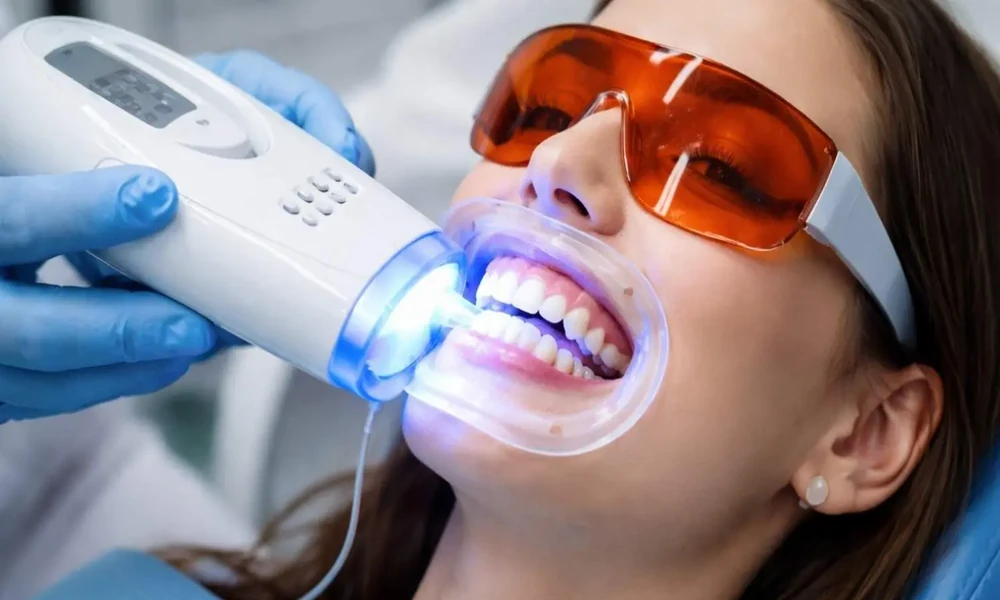
Teeth whitening with existing restorations often works best with custom trays or in office treatment because the shade change can be monitored. If sensitivity starts early, the plan can be adjusted. If one area is likely to become a mismatch, you can decide whether to stop at a more natural shade or move ahead with replacing one or two restorations afterward.
There is also the safety issue. Whitening is not meant to treat underlying disease. If a tooth has internal discoloration, a cracked filling, or a failing crown margin, bleaching will not fix the source. Clinical guidance on tooth discoloration and treatment options is outlined in this review of tooth discoloration, which explains why the cause of the stain matters as much as the shade itself.
Comparing whitening options when you already have dental work
| Option | Best For | Main Benefit | Main Risk With Restorations |
|---|---|---|---|
| Whitening strips or drugstore trays | Mild staining on mostly natural teeth | Lower upfront cost | Uneven whitening around crowns, fillings, or bonding |
| Custom take home trays from a dentist | People who want gradual control | More even application and adjustable pace | Restorations still do not lighten, so matching may still require follow up work |
| In office professional whitening | Faster results and close monitoring | Shade can be tracked more precisely | Visible color mismatch may appear quickly if front restorations are present |
| Whitening plus replacement of visible restorations | Front teeth with old crowns, bonding, or fillings | Best chance of a uniform cosmetic result | Higher total cost and more planning |
Three steps to take before whitening a restored smile
1. Get a restoration map. Ask your dentist to identify every visible filling, crown, veneer, and bonded area. Many people remember the big procedures and forget the small bonded repairs that can also stand out after whitening.
2. Decide on your target shade first. A natural brightening may be enough. Chasing the lightest possible white often creates the biggest contrast with older dental work. A more moderate result can look cleaner and more believable, and it may save you from replacing restorations that still function well.
3. Plan for matching work if needed. If you have a front crown or bonding that shows when you smile, build that into the budget and timeline from the start. That is often the missing step in whitening around dental restorations. The whitening itself is only one part of the cosmetic result.
A whiter smile is still possible when you already have dental work. It just needs a plan that respects how real teeth and restorations behave. When the sequence is right, the result looks smoother, feels less stressful, and avoids the surprise of uneven color after the fact. If you are thinking about whitening, schedule a visit with a family and cosmetic dentist and ask for a shade and restoration review before you start.